What Is the B Light Scheme?
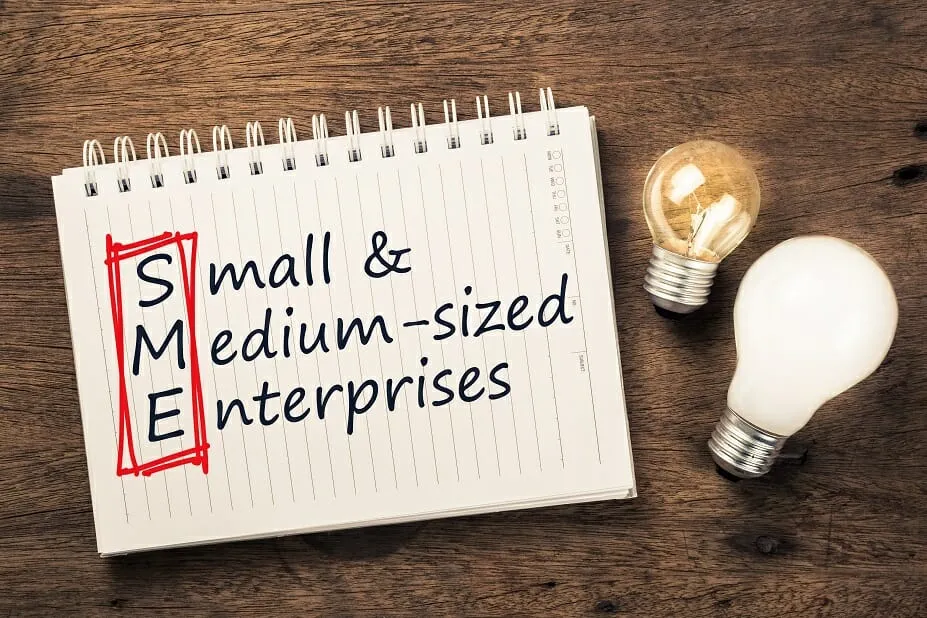
The B Light Scheme is a funding mechanism designed to support small and medium-sized enterprises (SMEs) that want to cooperate across borders under Interreg and European Territorial Cooperation (ETC) programmes. It was created to make cross-border cooperation more accessible for businesses by using simplified procedures, smaller project budgets, and shorter implementation periods.
Originally developed and implemented within specific Interreg cross-border programmes, the B Light Scheme has become a reference model for so‑called “light grant” instruments aimed at SMEs. While the exact rules depend on the programme and period, the underlying logic remains consistent: enable practical, low-risk cooperation between companies in neighbouring regions.
Why the B Light Scheme Was Created
Traditional Interreg projects were primarily designed for public institutions, development agencies, and large organisations. For many SMEs, these projects proved difficult to access due to complex administrative requirements, long timelines, and high financial risks.
The B Light Scheme was introduced to address these barriers by:
- Reducing administrative and reporting complexity
- Allowing smaller, business‑oriented project budgets
- Focusing on concrete market‑oriented cooperation
- Shortening project duration and payment cycles
The aim is not experimental research or policy development, but practical cooperation that delivers tangible business results.
Where the B Light Scheme Is Used
The B Light Scheme is not a single EU-wide programme. It is a scheme-level instrument implemented within specific Interreg cross-border programmes. The most well-known example is the Interreg Hungary–Croatia Cross-Border Cooperation Programme, where the B Light Scheme was introduced during the 2014–2020 programming period and later continued in an updated form.
Similar SME-focused light grant instruments have since appeared in other cross-border regions, often inspired by the same logic, even if they use different names or procedural details.
Who Can Apply
Eligibility rules vary by programme, but B Light schemes typically target:
- Micro, small, and medium-sized enterprises as defined by EU rules
- Companies legally established in the eligible cross-border area
- SMEs that form a cross-border partnership, usually with at least one company on each side of the border
In most cases, SMEs apply as project partners rather than as lead beneficiaries in the traditional Interreg sense. Administrative coordination is often handled by a scheme operator or intermediary body.
What Types of Activities Are Supported
B Light projects focus on cooperation activities that have a clear business rationale. Typical supported activities include:
- Joint development or adaptation of products and services
- Cross-border market entry and promotion
- Creation of joint supplier or distribution networks
- Testing of new technologies or processes in a cross-border context
Pure investments, large infrastructure, or activities without a cross-border added value are usually not eligible.
Funding Size and Intensity
One of the defining characteristics of the B Light Scheme is its limited but focused financial scale.
While exact figures depend on the programme and call, typical features include:
- Relatively small total project budgets compared to standard Interreg projects
- Grant rates commonly covering up to a fixed percentage of eligible costs
- Mandatory own contribution by participating SMEs
This structure is intended to keep projects manageable while ensuring that participating companies remain financially committed.
Project Duration and Timeline
B Light projects are usually short‑term. Implementation periods often range from several months up to one year.
In practice, this means that projects must be:
- Clearly defined from the start
- Operational rather than exploratory
- Feasible within a limited timeframe
Long preparation phases or open-ended development concepts generally perform poorly under this scheme.
How the Application Process Works
Unlike classic Interreg calls, the B Light Scheme usually applies a simplified application process.
Common elements include:
- Short application forms focused on business logic
- Standardised budgets with predefined cost categories
- Centralised submission through an online platform
Evaluation typically concentrates on cross-border relevance, feasibility, and expected business impact rather than policy alignment or institutional capacity.
State Aid and Regulatory Context
B Light schemes operate within the EU’s state aid framework. Most projects are implemented under either the de minimis rule or the General Block Exemption Regulation (GBER).
For SMEs, this has practical implications:
- Previous state aid received may limit eligibility
- Accurate declarations are required
- Misunderstandings at this stage can delay or block approval
Although simplified, the regulatory requirements remain binding.
Common Challenges for SMEs
Despite its lighter structure, the B Light Scheme still requires careful preparation. Typical challenges include:
- Unclear division of roles between cross-border partners
- Overly ambitious objectives for the available budget
- Misinterpretation of eligible costs
- Underestimating reporting obligations
Projects that perform best are usually those with realistic goals and well-aligned partners.
How the B Light Scheme Differs from Standard Interreg Projects
The table below illustrates key conceptual differences.
| B Light Scheme | Standard Interreg Project |
|---|---|
| SME-focused | Often public-institution focused |
| Simplified administration | Complex reporting and controls |
| Short project duration | Multi-year implementation |
| Smaller budgets | Larger, multi-partner budgets |
The Role of the B Light Scheme Today
Although originally introduced in specific programmes, the B Light Scheme has influenced how managing authorities think about SME participation in cross-border cooperation.
Its core idea — lowering entry barriers while preserving accountability — continues to shape newer funding instruments across Europe.
For SMEs, the scheme demonstrates that cross-border cooperation does not require large consortia or multi-year commitments to be effective.
Understanding how B Light works provides a useful reference point for evaluating similar opportunities in other Interreg regions.